Peace Is Something We Can Plant
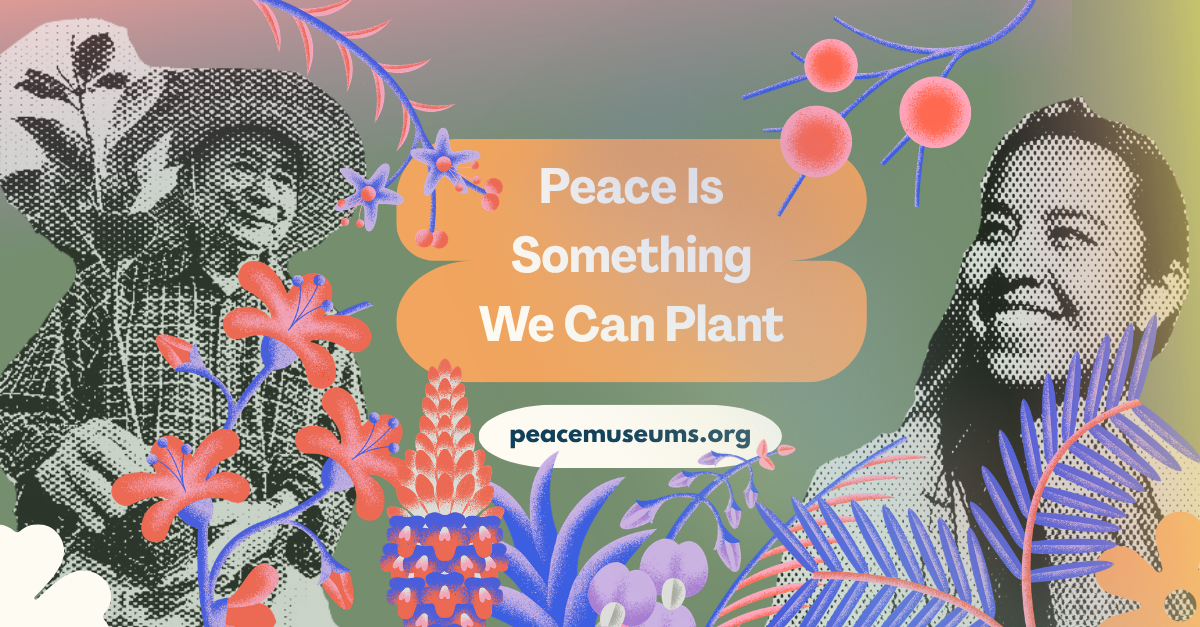
Peace Museum Paris. Peace Hero exhibition
Peace is often associated with diplomacy, conflict resolution, and the prevention of violence. But Positive Peace asks us to look further: at the conditions that allow people, communities, and societies to thrive. The stories of Lyla June Johnston and Akira Miyawaki offer a powerful perspective. Although they came from very different backgrounds, both dedicated their work to rebuilding relationships between people and the living world.
A Peace Hero Story: Lyla June Johnston
Lyla June Johnston, a Diné scholar, educator, artist, and advocate for Indigenous ecological knowledge, has brought global attention to traditional Indigenous approaches to caring for the land. Her work challenges the idea that humans must choose between civilization and nature. Indigenous societies developed sophisticated ways of managing forests, food systems, water, fire, and landscapes while supporting biodiversity and human communities. Johnston emphasizes reciprocity: humans are not simply consumers of nature, but participants in living ecosystems. This perspective has an important lesson for peacebuilding. Strong communities depend on relationships of care, responsibility, and mutual benefit. The same principles that help people live well together can also shape how we relate to the natural world.
A Peace Hero Story: Akira Miyawaki
Japanese botanist and ecologist Akira Miyawaki spent more than five decades studying forests and developing methods to restore native ecosystems. Rather than simply planting large numbers of trees, Miyawaki studied the vegetation naturally belonging to each location and used this knowledge to recreate multilayered native forests. His approach has been applied at more than 1,700 sites in Japan and elsewhere, involving tens of millions of trees. His work demonstrates that ecological restoration can be practical, local, and transformative. A restored forest provides habitat, protects soil and water, improves local environments, and creates places where communities can connect with nature.
What They Teach Us About Peace
Johnston and Miyawaki show that peace is not only about preventing conflict. It is also about creating healthy relationships and conditions for life to flourish.
Their work reminds us that:
Reciprocity matters. Healthy societies are built on giving as well as receiving.
Local knowledge matters. Understanding a particular place is the beginning of caring for it.
Restoration is possible. Damaged environments and damaged relationships can be rebuilt.
We are interconnected. The wellbeing of people, communities, and ecosystems cannot be separated.
Change can begin locally. A forest can begin with a few trees. A stronger community can begin with a few people working together.
Building Peace Today
Their ideas can become everyday practices. We can grow food and native plants, create habitat for insects and birds, compost, reduce waste, learn about the ecosystems around us, support community gardens, participate in local restoration projects, or simply care for a small piece of land. The action itself may seem small. Its social value is not. Working together to restore a garden, forest, riverbank, or neighborhood creates opportunities for people to cooperate, share knowledge, build trust, and take responsibility for something beyond themselves. That is Positive Peace in practice.
The Work of Peace Museums
At Peace Museums, we believe that stories of peace should not remain in the past. They should help us understand what is possible in the present. The lives of Lyla June Johnston and Akira Miyawaki show two different paths toward the same principle: a better future is built through relationships of care. Care for the land. Care for communities. Care for future generations. A forest does not grow because of one person. It grows through countless relationships between trees, soil, water, animals, microorganisms and time. Our societies are not so different.
Peace grows when we learn to work together, restore what has been damaged, and create conditions in which both people and the living world can flourish.
Perhaps one of the most meaningful things we can leave future generations is not simply a memory of what we believed in, but a healthier world because we acted on it.
Peace is something we can plant.
#PeaceMuseums #PositivePeace #PeaceBuilding #EnvironmentalPeace #ForestRestoration #LylaJuneJohnston #AkiraMiyawaki #PeaceEducation #Community #Sustainability
