Peace Will Come When There Are Peacebuilders
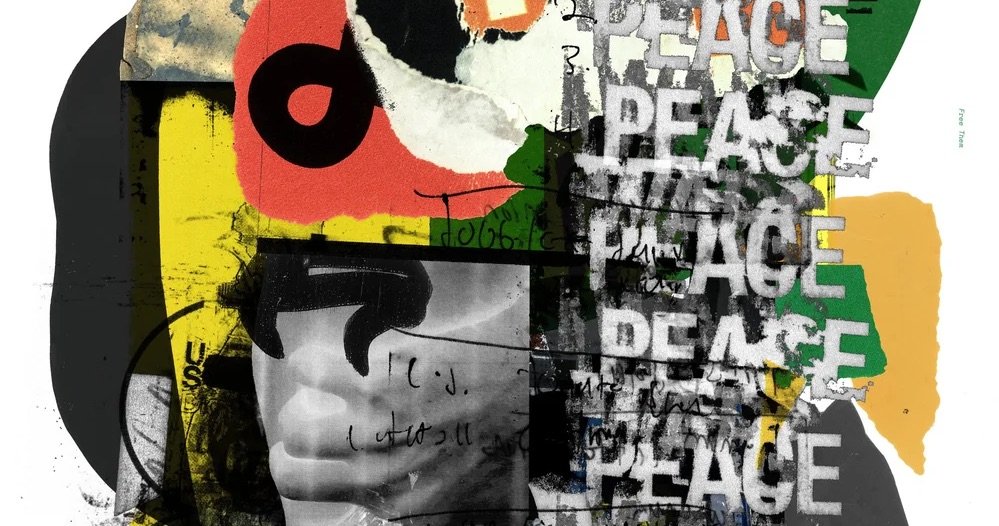
Peace: Free Them Free US. 2025 | Keith Kitz
When we talk about peace, we often talk about it as the opposite of war. We wait for conflicts to end, for agreements to be signed, for weapons to be put down, and for political leaders to reach a compromise. But peace is more than the absence of violence. Positive peace is about the conditions that allow people and communities to live with dignity, build trust, resolve disagreements without violence, and participate in a society where they feel that they belong.
This way of thinking about peace changes an important question. Instead of asking only, “How do we stop war?” we can also ask, “How do we build a culture in which peace becomes possible?”
The answer begins with people.
Peace will come when there are peacebuilders.
Peacebuilding is not something that belongs only to diplomats, governments, or international organizations. It is also the work of educators, community leaders, artists, historians, students, parents, activists, researchers, journalists, and ordinary people who decide that relationships, dialogue, understanding, and cooperation are worth investing in. But becoming a peacebuilder requires us to learn about peace in the first place.
We need to learn the history of peace
Most of us grow up learning a great deal about wars. We learn when they started, who fought, who won, who lost, and how borders and societies were changed. That history matters. But there is another history that deserves much more attention: the history of people who resisted violence, negotiated peace, protected others, organized movements, built bridges between divided communities, and created new ways of resolving conflict.
Peace education gives us an opportunity to discover that history.
It can introduce us to peace movements and peace heroes whose names may not appear in the traditional history books. It can help us understand how reconciliation works, why conflicts escalate, how societies recover from violence, and what ordinary people can do when institutions fail to create peace.
This is one of the reasons peace museums are so important.
Museums are places where societies decide what is worth remembering. A peace museum can preserve the stories of peace movements and peacebuilders, but it can also do something more ambitious: it can help visitors imagine a different future. The stories we choose to remember influence the possibilities we can imagine.
Through PeaceMuseums.org, we have an opportunity to connect these stories, institutions, educators, activists, and projects and to strengthen a global network dedicated to making peace visible and accessible.
Building a peace community
Learning about peace should not end with reading a book or visiting a museum. The next step is finding other people who share the same commitment.
Every peacebuilder needs a community. For some people, that community might be a local organization working with young people. For others, it might be a university program, a community initiative, a peace museum, a humanitarian organization, or an international peace network. There is no single model for becoming involved.
The important thing is to find a way to contribute that is meaningful to you. Perhaps you are good at bringing people together. Perhaps you are an educator, an artist, a researcher, a storyteller, an organizer, or someone who simply knows how to listen. Peacebuilding needs all of these skills.
This is also why building connections between peace organizations matters. No single organization can build peace alone. We need networks in which ideas, experiences, resources, and stories can be shared. We need to learn from one another and recognize that peacebuilding in one community can offer valuable lessons to another.
Make peace visible
There is another simple thing each of us can do: make peace visible. Our public spaces are filled with messages about consumption, competition, politics, conflict, and fear. What would happen if we also made peace part of the visual landscape? A peace symbol in a window. A peace poster in a classroom. A message about peace on social media. A book about peace on your desk. A conversation at work about how disagreement can be handled constructively. These gestures will not end a war. But they communicate something important: peace is not an abstract idea reserved for international conferences. It is a value that belongs in everyday life. Visibility also creates recognition. When people see that others care about peace, they may feel more confident expressing their own commitment to it. A movement grows when people realize they are part of something larger than themselves.
Five minutes for peace
Peacebuilding can also become a daily practice. Set aside five minutes each day to learn something about peace. Read about a peacebuilder. Listen to someone's experience. Learn about a peace movement. Reflect on a conflict in your community. Consider how a difficult conversation could be approached differently. Five minutes may seem insignificant when compared with the scale of the world's conflicts. But social change is rarely created by one dramatic action alone. It is built through habits, relationships, knowledge, and thousands of small decisions made consistently over time. One particularly useful habit is to pay attention to how we talk about conflict. The next time someone mentions war, violence, or political conflict, make room for a conversation about peace as well. Ask what peace would require. Who is working toward it? What has worked elsewhere? What would reconciliation look like? What can ordinary people do? We cannot build a culture of peace if peace is missing from our conversations.
Start with what is already peaceful
There is one more place where peacebuilding can begin: by noticing the peace that already exists. In the middle of a world filled with conflict, it is easy to overlook the enormous amount of cooperation that happens every day. Families care for one another. Neighbors help each other. People from different backgrounds work together. Communities solve problems. Former enemies reconcile. Teachers help young people understand one another. Volunteers show up for people they may never have met before.
These are also stories of peace. Recognizing them does not mean ignoring injustice or pretending that conflict does not exist. Quite the opposite. If we want to build more peace, we need to understand where peace is already working and learn from it.
Then we can ask a more ambitious question: What could peace look like in the future? What would our schools look like if peace education were treated as essential? What would workplaces look like if people were better equipped to navigate disagreement? What would communities look like if dialogue, inclusion, and cooperation were deliberately designed into public life? And what would our own contribution be?
A few places to begin
There are many ways to continue learning. If you want to explore peace through film, watch Peace One Day, the 2004 documentary by British filmmaker Jeremy Gilley, which follows his campaign to establish a global day of peace and nonviolence. It is a powerful example of how one person's idea can develop into an international movement. For a deeper understanding of peacebuilding, read John Paul Lederach's Building Peace: Sustainable Reconciliation in Divided Societies. Lederach's work offers an important perspective on reconciliation and the long-term relationships required to rebuild societies divided by conflict.
And if you want to connect with others working to make peace visible and strengthen peace education, explore PeaceMuseums.org and become part of the Peace Museums network. The goal is not simply to agree that peace is good. The goal is to become better at building it. That begins with education. It grows through community. It becomes stronger through practice. And it becomes possible when enough people decide that peace deserves their time, their attention, their creativity, and their work. So perhaps the place to begin is with a question we can ask ourselves every morning:
What can I do for peace today?
Notice the peace that already exists around you. Learn from the people who have built peace before you. Connect with others who are doing the same. Imagine what a more peaceful future could look like—and then find one small, concrete way to help create it. Peace is not something we should simply wait for. Peace is something we can build. And the world needs more peacebuilders.
#PeaceMuseums #PositivePeace #PeaceArt #ArtForPeace #PeaceCulture #PublicArt #PeaceEducation #PeaceBuilding
