Peace: Free Them Free US. 2025 | Keith Kitz
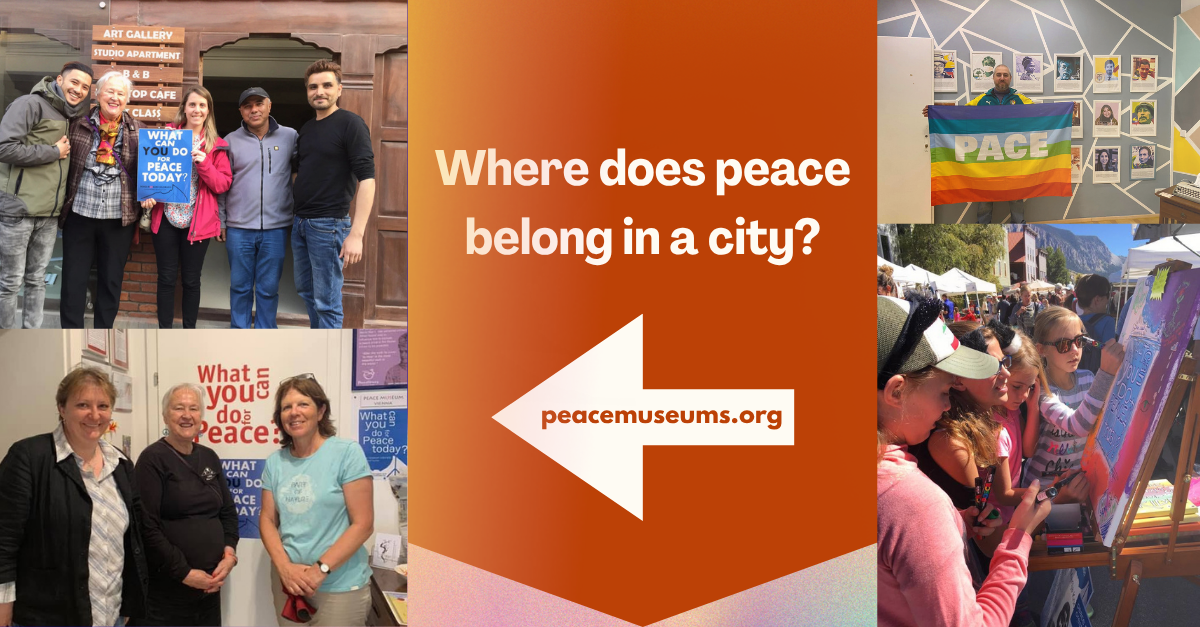
Where does peace belong in a city? In a museum? In a public square? In a school, a neighborhood café, or a park where people meet and talk?
For Peace Museums, this is more than a question of location. It is a question of purpose. Finding a home for a Peace Museum is already a challenge. But finding the right place for peace means thinking beyond the walls of a building. It means asking where people come together, where dialogue can happen, and where the idea of a more peaceful society can become part of everyday life. At Peace Museums, we believe that peace should not be confined to history books, exhibition rooms, or international commemorations. Peace needs to be visible, accessible, and present in the places where people live, work, learn, and meet.
Beyond the Absence of War: Building Positive Peace
Peace is often understood as the absence of war or violence. But what does it take to create a society in which people can live together with dignity, trust, and mutual respect?
This is where the concept of positive peace becomes essential. Positive peace is not simply the absence of conflict; it is the presence of the attitudes, institutions, and structures that allow peaceful societies to flourish. It includes cooperation, equal opportunities, respect for human rights, access to information, strong communities, and the ability to resolve disagreements without violence. For Peace Museums, this understanding changes the way we work. Our mission is not only to remember the people who fought for peace or to document the lessons of history. It is also to help people recognize how peace is built today — through education, cultural exchange, community engagement, and everyday acts of solidarity. Peace Museums can serve as meeting points for these efforts. They can connect people who might otherwise never meet, bring local initiatives into public view, and create opportunities for conversations that lead to action.
But first, we must ask a practical question: Where should these meeting points be?
Finding the Right Place for Peace
When looking for a location for a Peace Museum, we consider more than the size of a room or the number of visitors passing by. We look at the wider environment.
Who lives and works nearby? Are there peace activists, educators, artists, community organizers, or local businesses willing to support the initiative? Are there schools, universities, cultural organizations, or other institutions with which we could collaborate? Is there a public park, a community space, or a busy street that could become a natural meeting point?
A location can offer an address, but a community gives it meaning. The most promising places for peace are those where people are willing to participate — where a museum can become part of a living network of relationships rather than an isolated institution. A café might host a conversation about nonviolence. A school might invite students to explore the lives of peace heroes. An artist might contribute a new perspective on peaceful coexistence. A neighborhood business might help bring a message of peace into the street.
Each connection creates an opportunity to make peace more tangible. And yet, even the best location is only a starting point. A place for peace must be filled with peace through the people who use it, the stories it tells, and the relationships it helps create.
Taking Peace Out Into the Streets: Windows4Peace
At some point, we decided not to wait for people to come to the museum. Instead, we would take peace to them. This idea inspired Windows4Peace, a project that transforms ordinary windows into public spaces for peace education and inspiration. The concept is simple: local residents, neighbors, and business owners open their windows to stories of people who have contributed to peace. Portraits and short biographies of peace heroes, peacemakers, and peace allies appear in storefronts and other visible places, inviting passersby to pause, look, and discover something new. A window becomes an exhibition. A street becomes a gallery. A neighborhood becomes a place where peace is part of the public conversation. More than 1,000 peace heroes have been displayed through this initiative, helping bring the stories of peacemakers into everyday urban life. These are not simply portraits of famous figures from history. They are reminders that peace has many faces and takes many forms. It can be expressed through courage, reconciliation, human rights advocacy, education, humanitarian work, and the determination to stand up for others. Windows4Peace also offers a different way of thinking about public participation. A business owner does not need to become a peace expert to contribute. A neighbor does not need to organize a major event. Sometimes, opening a window and making space for a meaningful story is already a step toward a more visible culture of peace. The project demonstrates a central principle of positive peace: change does not happen only in international institutions or through major political decisions. It can also begin locally, through small acts of cooperation that connect people around a shared purpose.
Peace Museums as Platforms for Collaboration
Windows4Peace is one example of how Peace Museums can work beyond their physical locations. Across our broader work, we explore different ways to make peace education accessible and to connect people with ideas, stories, and initiatives that can inspire action.
Peace Heroes brings attention to individuals whose lives and work demonstrate what it means to contribute to peace. Their stories can help visitors understand that peace is not an abstract ideal but a practice shaped by real choices and actions.
Posters4Peace uses art and visual storytelling to explore positive peace. By inviting artists to communicate what a peaceful society might look like, the project creates space for creativity, reflection, and new perspectives.
Peace Talks and educational activities can bring people together for dialogue, discussion, and learning. They offer opportunities to exchange experiences, explore difficult questions, and discover practical ways to respond to conflict and division.
Together, these initiatives reflect a broader vision: Peace Museums can be more than places where peace is presented. They can be platforms where peace is practiced, shared, and developed through collaboration. To make this vision sustainable, however, we need partners. We need educators who can bring peace into classrooms, artists who can give it a visual language, researchers who can deepen our understanding, community organizations that already work toward social change, and local businesses willing to make room for peace in public life. We also need to learn from initiatives beyond our own network. Around the world, people are developing creative approaches to mediation, dialogue, environmental protection, social inclusion, reconciliation, and peace education. Their work deserves to be connected, shared, and made more visible. A Peace Museum cannot do everything alone. But it can help bring the right people together.
What Can We Do for Peace Together?
Finding a place for peace is an ongoing process. It requires suitable spaces, committed people, practical resources, and a willingness to work across institutional and cultural boundaries. It also requires us to look beyond our own projects and ask how we can support the work of others. Perhaps your organization runs peace education workshops. Perhaps you are working with young people, supporting communities affected by conflict, creating art that challenges prejudice, or developing new approaches to dialogue and reconciliation. Perhaps you have a window, a wall, a public space, or a network that could help make peace more visible. We want to hear about it. We invite peace museums, cultural institutions, schools, universities, NGOs, artists, researchers, peace activists, local businesses, and individuals to connect with us. Share your projects, tell us what you are working on, and let us explore how our efforts might complement one another. We are interested in collaborations that turn shared values into practical action: joint exhibitions, educational programs, public-space projects, exchanges of knowledge, community events, and new ways of communicating the meaning of positive peace. You do not need to have a fully developed project to start a conversation. Sometimes, the most important collaboration begins with a simple question.
#PeaceMuseums #PositivePeace #PeaceArt #ArtForPeace #PeaceCulture #PublicArt #PeaceEducation #PeaceBuilding
