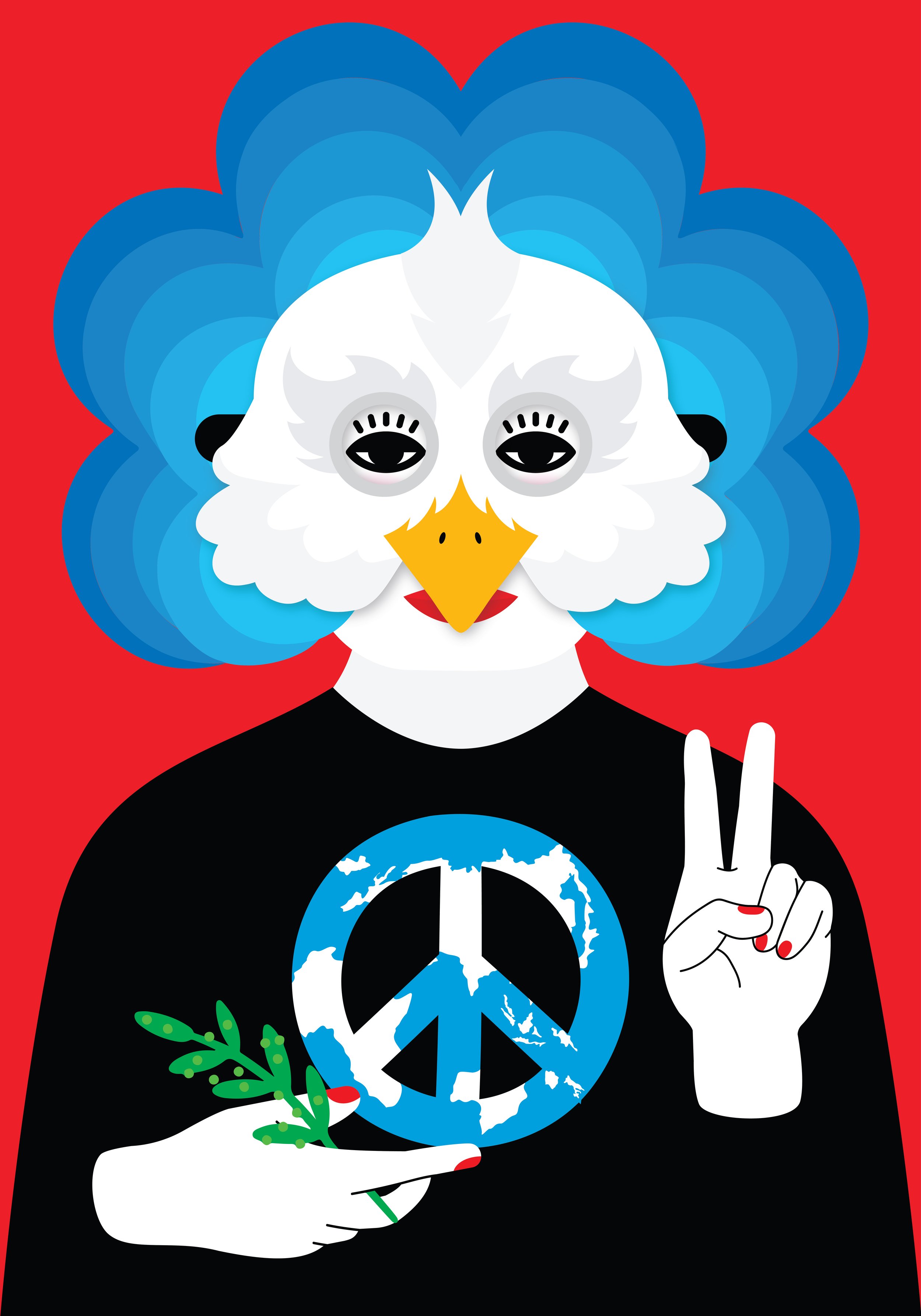
We live in a world where information is everywhere. Every day, we wake up to news about conflicts, wars, political tensions, humanitarian crises, and challenges affecting communities across the globe. We are more informed and more connected than ever before. But in the middle of all this information, are we giving ourselves enough time to reflect? Are we taking a moment to understand what is happening, to process what we are seeing, and, perhaps most importantly, to understand how we are feeling? Being informed is important. Staying engaged with the world matters. But constantly consuming information without allowing ourselves time to reflect can leave us emotionally exhausted.
We need to make space for inner peace. Not because we want to ignore the world, but because we want to be strong enough, compassionate enough, and thoughtful enough to contribute positively to it.
Start with yourself: Make room for inner peace
Sometimes, the most important conversation we need to have is the one with ourselves. How am I feeling today? What is bringing me joy? What is making me anxious? What can I change? What do I need to let go of? Meditation can be a beautiful way to begin this journey. Just a few minutes of mindful breathing, silence, or guided meditation can help us slow down, reconnect with ourselves, and create a little more clarity. Peace begins with awareness. It begins when we learn to respond rather than simply react. And remember: protecting your peace does not mean being indifferent to suffering. It means looking after your emotional well-being so you can remain present, empathetic, and engaged.
@Peace Youth Summit
The Mirror of Peace: What do people living in peace look like?
Imagine walking into a public square and finding a life-size mirror with a powerful message: "This is what people living in peace look like." You stop. You look into the mirror. And suddenly, you become part of the artwork. This is the beautiful idea behind The Mirror of Peace, an interactive public art installation by Dutch artist Renee van Bavel. Rather than showing us an idealized image of peace, the installation reflects the people standing in front of it. It reminds us that peace is not an abstract concept belonging only to politicians, diplomats, or history books. Peace is about us. It is about our everyday lives, our relationships, our choices, and the way we treat one another. The installation has travelled internationally, including presentations in Venice, Germany, and Ljubljana. And right now, there is a wonderful opportunity to experience it in Vienna!
So, if you are in Vienna, take a moment to visit. Stand in front of the mirror. Look at yourself. Think about the message. Perhaps ask yourself: Am I contributing to a world in which people can live in peace? Sometimes, one reflection can inspire a thousand thoughts.
Protect your peaceful home
Peace is not only something we hope to see between countries. It is something we should cultivate in our own homes. Our homes should be places where we feel safe, respected, understood, and accepted. A peaceful home is not necessarily a home without disagreements. It is a home where people can communicate, listen, forgive, establish healthy boundaries, and resolve conflicts with respect. Protect your peaceful home. Be mindful of the words you use. Make time for meaningful conversations. Listen without immediately judging. Appreciate the people around you. And remember that peace also means respecting yourself. Make sure peace is present in the way you speak, the way you act, and the atmosphere you create. Because a more peaceful world starts with the spaces we create around us.
Peace in action: Good news from Ireland
There are also reasons to feel hopeful when we look at peacebuilding initiatives around the world. In Northern Ireland and across the border, the EU-supported PEACEPLUS program represents a major investment in reconciliation, cooperation, and shared communities. With approximately €1.14 billion in program funding, PEACEPLUS supports initiatives designed to strengthen peace, prosperity, and cross-border cooperation. One particularly inspiring area is the involvement of young people. A new generation is finding ways to build relationships across communities, challenge inherited divisions, and shape what life after the Good Friday Agreement can look like. Youth-led dialogue, community projects, and cross-border collaboration demonstrate something important: Peace is not a finished chapter in history. It is an ongoing commitment that every generation must continue. The next generation should not simply inherit a peace agreement. They should have the opportunity to build a culture of peace themselves. That is something worth celebrating.
A report worth exploring: Positive Peace Report 2026
What makes a society peaceful? Is it simply the absence of war? Or is it also the presence of justice, trust, opportunity, equality, and strong communities? The Institute for Economics & Peace explores these questions in its Positive Peace Report 2026. The concept of Positive Peace focuses on the attitudes, institutions, and structures that create and sustain peaceful societies. It encourages us to look beyond conflict and consider the conditions that allow people and communities to flourish. This is an important perspective because peace is not only about preventing violence. It is also about creating societies where people can live with dignity, opportunity, and a sense of belonging.
A question to reflect on: What could we do today to strengthen Positive Peace in our own communities?
A peace hero to remember: Navanethem "Navi" Pillay
When we talk about peace, we should also talk about the people who have dedicated their lives to defending human dignity. One remarkable example is Navanethem "Navi" Pillay, the South African lawyer and former United Nations High Commissioner for Human Rights. Growing up under apartheid, Pillay experienced the reality of discrimination and injustice. In 1967, she became the first woman to establish a law practice in Natal Province, South Africa. She used her legal career to defend anti-apartheid activists and challenge abuses of power. Her journey continued through international justice. She served as a judge at the International Criminal Tribunal for Rwanda, where her work contributed to landmark developments in recognizing sexual violence as a potential act of genocide. She later became a judge at the International Criminal Court and served as United Nations High Commissioner for Human Rights from 2008 to 2014. Her story reminds us that peace requires courage. It requires people who are willing to speak when others remain silent, defend those whose voices are ignored, and stand up for human dignity even when doing so is difficult.
Pillay's life offers an important lesson: Peace is not passive. Peace requires action, responsibility, and the courage to stand up for what is right. We need more people who understand that protecting human rights is an essential part of building a peaceful world.
Join our peace movement!
What does peace mean to you? Who has inspired you to believe in a more peaceful world? We would love to hear your stories. Let's create a space where positive stories, meaningful actions, and inspiring people receive the attention they deserve. You don't have to change the entire world today. You can start with one conversation, one act of kindness, one moment of understanding, or one decision to choose compassion over anger.
One final thought: Protect your peace. Share your peace.
The world needs people who are informed, but it also needs people who are reflective. It needs people who care, who listen, who understand, and who are willing to take action. Take time to breathe. Take time to reflect. Protect your inner peace and the peace of your home. Bring that peace into your relationships, your workplace, your community, and the wider world. Because peace is not something we should only wish for.
It is something we can practice, protect, and build together.
Join our peace movement. Let's make peace visible.
#ProtectYourPeace #PeaceBeginsWithin #PositivePeace #Peacebuilding #HumanRights #ChoosePeace #PeaceInAction #TogetherForPeace #PeaceMuseums
