Why We Need a Day for Peace — and Five Minutes Every Day
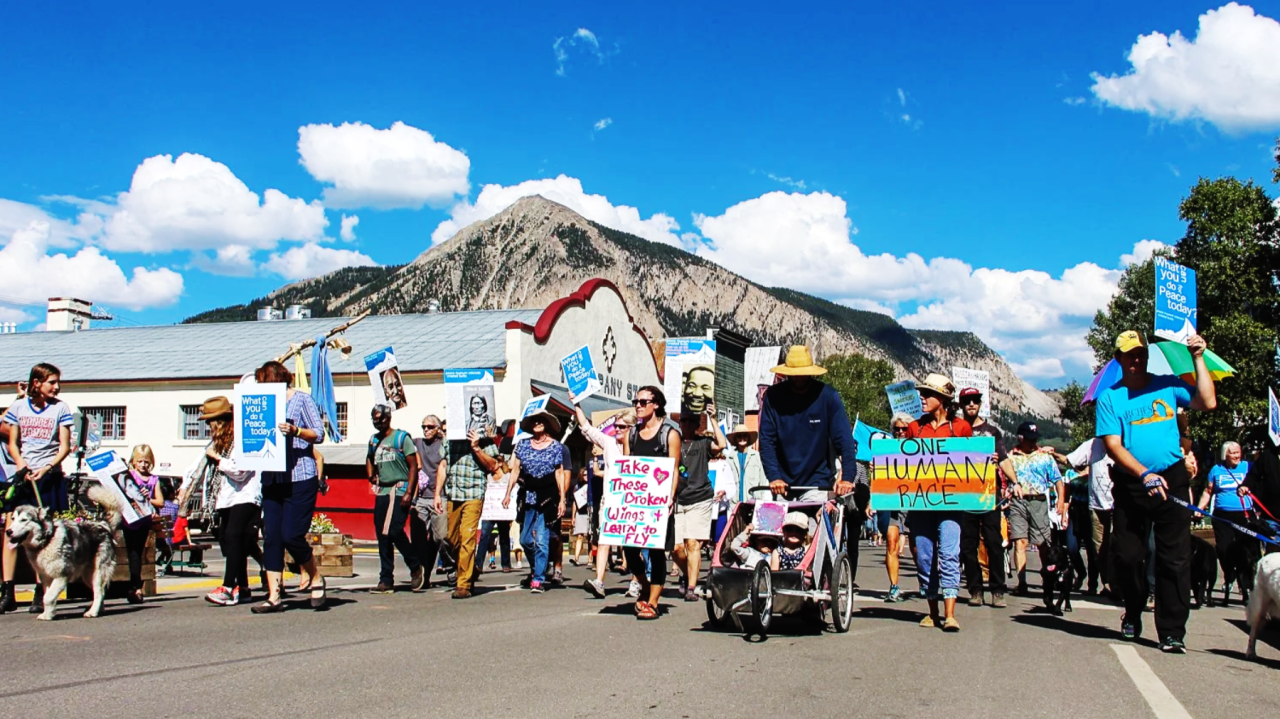
Peace Hero Walk. Colorado
Every year, on September 21, the world pauses to mark the International Day of Peace. It is a day that asks us to turn our attention toward something that can sometimes feel both deeply familiar and remarkably distant: peace. We know what peace means to us personally, and yet, when we look at the world around us, peace can seem like an enormous and complicated idea, something negotiated in conference rooms, written into treaties, or discussed by governments and international organizations. But peace is also something much closer to us. It is something we experience, practice, protect, and build in our everyday lives.
The International Day of Peace was established by the United Nations General Assembly in 1981, and the first Peace Day was observed in 1982. In 2001, September 21 was unanimously established as a day of nonviolence and ceasefire. The intention was to create a moment in the international calendar when people everywhere could reflect on the ideals of peace and strengthen their commitment to them through education and public awareness. More than four decades later, the day has become an opportunity for communities, schools, organizations, museums, governments, artists, activists, and individuals around the world to come together around the idea that peace deserves our attention.
But why do we need a day dedicated to peace in the first place?
Perhaps because peace is too important. We dedicate days to remembering important historical events, protecting the environment, celebrating cultures, raising awareness about health and human rights, and recognizing people and ideas that have changed our societies. A day dedicated to peace gives us permission to stop for a moment and ask questions that are easy to lose sight of in the speed of everyday life: What does peace mean? What makes peace possible? Who is working for peace around us? And what can each of us do to contribute to it?
These questions are especially important at a time when conflict and violence occupy so much of our collective attention. We see wars, political divisions, displacement, discrimination, and growing polarization in the news every day. We hear a great deal about what divides us. Much less often do we hear about the people quietly working to bring communities together, rebuild trust, prevent violence, create dialogue, and make it possible for people with very different experiences to live alongside one another. Yet this work is happening everywhere.
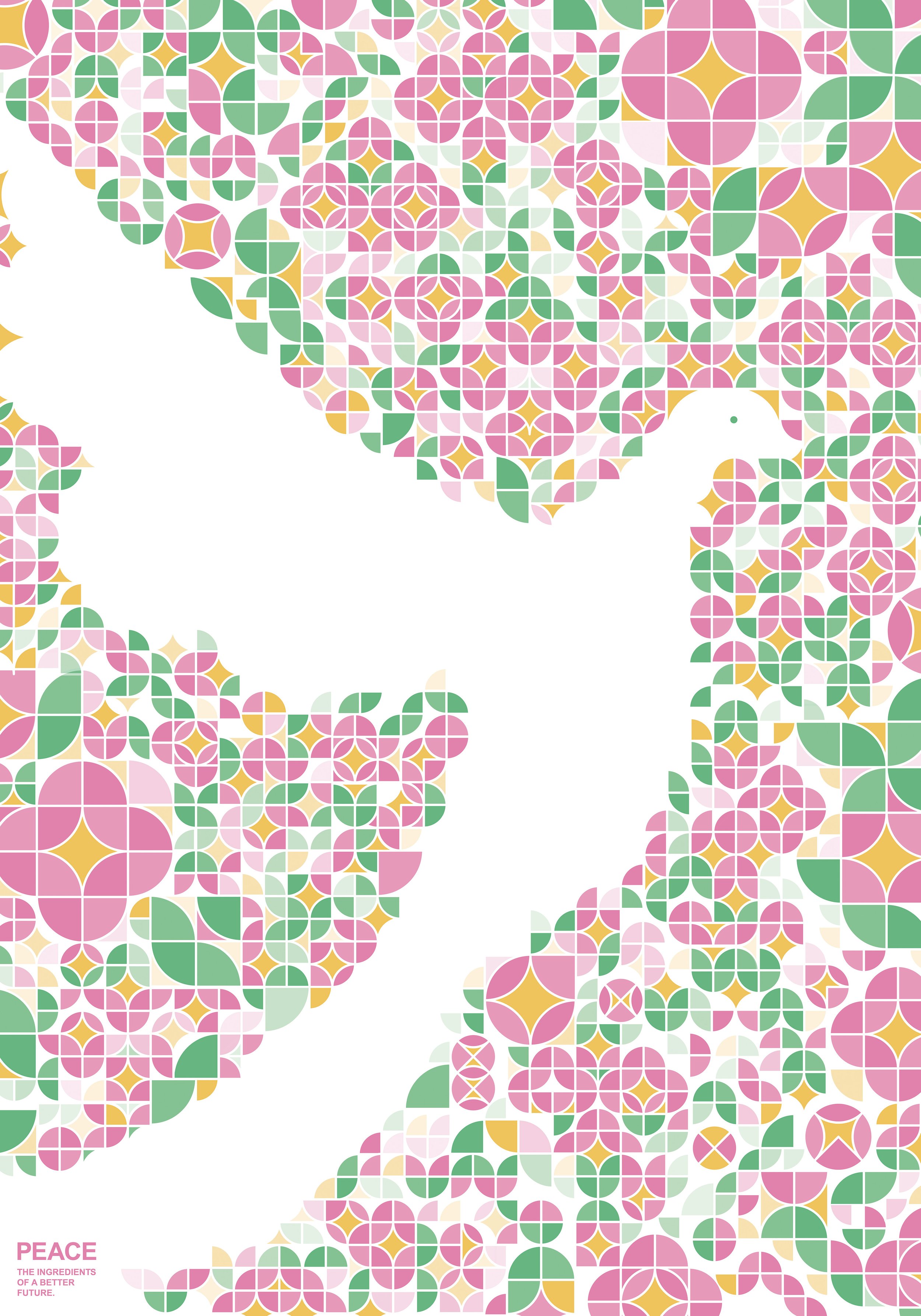
WANG, SHAO-CHUN
Peace is being built every day.
Understanding peace differently
For a long time, peace has often been understood primarily as the absence of war or violence. Ending violence is, of course, fundamental to peace, but it is only part of the picture. The concept of Positive Peace, developed within the field of peace and conflict studies and widely used by peace researchers, invites us to think about the conditions that allow peaceful societies to flourish. Positive Peace is associated with things such as equitable access to resources, good relations between people and communities, inclusive institutions, acceptance of the rights of others, and the ability to resolve differences without violence.
This way of thinking changes the question we ask. Instead of asking only how we can stop violence, we can also ask what kind of societies, communities, relationships, and institutions make violence less likely in the first place.
What happens when children grow up learning how to listen to people whose experiences are different from their own? What happens when communities create spaces where disagreement can be expressed without becoming hostility? What happens when people feel that they belong, that their voices matter, and that they have a meaningful role in shaping the future of their communities? What happens when societies invest in education, dialogue, inclusion, justice, and opportunities for people to work together?
These are also questions about peace.
Peace, in this sense, is not simply the moment when a war ends. It is the ongoing work of creating the conditions in which people can live with dignity, security, opportunity, and connection.
The people who make peace possible
This is why we need to talk about peace work and the people who do it.
When we think about peacemakers, we may first imagine diplomats sitting around negotiating tables or international organizations working to resolve conflicts between countries. Their work is essential. But peacemaking happens in many other places as well. A teacher who creates a classroom where children learn to resolve disagreements is doing peace work. A community organizer bringing people together across social or cultural divisions is doing peace work. A mediator helping two sides find a way forward is doing peace work. An artist creating space for people to encounter difficult histories and imagine different futures is doing peace work.
So are the researchers who study the causes of conflict, the activists who advocate for peaceful change, the museum professionals who preserve difficult histories and invite dialogue, and the ordinary people who decide to listen rather than immediately judge.
This year's International Day of Peace theme, “Invest in Peace: For Everyone, Everywhere, Every Day,” draws attention to what the United Nations describes as the “everyday architects of peace.” The phrase is important because it reminds us that peace is not created only by people with official titles or positions of power. It is also created through thousands of everyday choices and relationships, often taking place far from the world's centers of political power.
These people and their work deserve to be seen. They deserve to be remembered. And they deserve to inspire us.
The importance of imagining peace
There is another reason why we need a day for peace: we need opportunities to imagine it.
Before we can build a different future, we have to be able to imagine that future. This may sound simple, but imagination is an important part of peacebuilding. If we can only imagine the world as it is, it becomes difficult to imagine how it could be different.
This is one of the reasons museums have such an important role to play.
Museums are often thought of as places where we preserve the past. Peace museums do this work, but they also ask us to look forward. They preserve memories of war and violence so that we can learn from them, but they also create opportunities to ask what comes next. They bring people into contact with histories that may be unfamiliar or uncomfortable. They create space for reflection, dialogue, education, and imagination.
A peace museum can therefore become more than a place where we learn about peace. It can become a place where we practice thinking about peace.
At Peace Museums, this is at the heart of what we are trying to create. We are constantly connecting people, stories, ideas, and institutions across borders. From Nepal to Colorado, from Vienna to Paris, these connections remind us that peace is not owned by any one country or culture. There are different histories of peace, different traditions of peacemaking, and different ways of understanding what peaceful societies can look like. Yet there is enormous value in bringing these perspectives into conversation.
Peace has no borders.
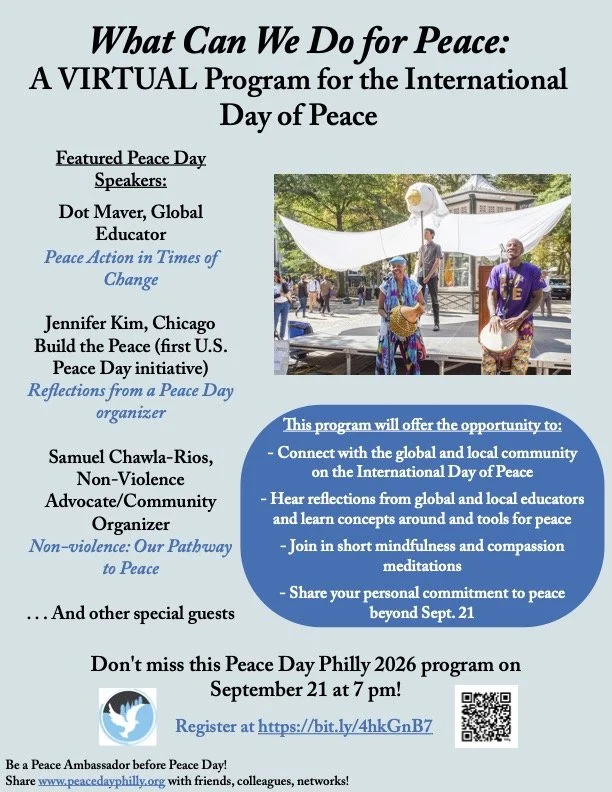
A global day, experienced locally
One of the most beautiful things about the International Day of Peace is that it does not belong to one place. Today, September 21, people around the world are marking the day in very different ways.
In Paris, UNESCO is holding programs focused on building a culture of peace, including discussions around dialogue, solidarity, mediation, and peaceful coexistence. In Gernika, Spain, the Gernika Peace Museum is opening its doors with free admission as part of its Peace Day activities. In Ulaanbaatar, Mongolia, a Peace Bell ceremony is bringing people together across faith traditions for prayer, reflection, and a shared commitment to peace. In Tokyo, Peace Day programming is bringing people together through music and culture, while other cities are organizing peace walks, public conversations, artistic projects, educational activities, ceremonies, and community gatherings.
The forms are different, but the intention is remarkably similar: to create a moment in which people can stop, reflect, connect, and give peace their attention.
That matters because peace is not something that should only be discussed when there is a crisis. If we wait until violence has already begun, we have waited too long to begin thinking about peace.
Peace needs preparation. It needs education. It needs imagination. It needs relationships and institutions that can withstand disagreement. It needs people who know how to listen, communicate, mediate, and repair. And it needs communities that understand that peace is not passive. Peace requires participation.
What if Peace Day became five minutes every day?
At Peace Museums, we have been thinking about the relationship between a day dedicated to peace and the rest of the year. Perhaps we need both.
We need September 21. We need a day when the world deliberately puts peace on the agenda and reminds itself that peace is worth talking about. But we also need to carry that attention into the other 364 days of the year.
What if, instead of thinking about peace only as something we celebrate once a year, we gave ourselves five minutes for peace every day?
Five minutes might be enough to read something about a peacemaker whose story we don't know. It might be enough to listen carefully to someone with whom we disagree. It might be enough to learn about a conflict we have never understood, to consider how our own assumptions affect the people around us, or to think about what our community needs in order to become more inclusive and connected.
Five minutes could also be a conversation with a child about what peace means to them. It could be an apology. It could be reaching out to someone with whom we have lost contact. It could be learning how to respond differently to conflict. It could be volunteering, supporting a community initiative, creating art, visiting a museum, or simply taking a moment to imagine the kind of world we would like to help create.
None of these actions will solve a war or transform a society overnight. But that is not the point. Peacebuilding has always been both local and global, both structural and personal. Large changes are made possible through the accumulation of smaller changes: new relationships, new habits, new conversations, new institutions, and new ways of imagining what is possible. Five minutes will not create peace by itself. But five minutes can create space for peace. And perhaps that is where we should begin.

WaymoreHuang
Making space for peace
So, do you have a Peace Day today? You do not have to attend an official ceremony or organize a large event to participate. You can make your own Peace Day wherever you are. You can make space for a conversation, a story, a question, a relationship, or an idea.
You can ask yourself what peace means in your own life and what it means in your community. You can think about the people who are already doing peace work around you and consider how their work might be supported. You can learn something new about a place or a person whose history is different from your own. You can make a commitment to practice one small aspect of Positive Peace: listening more carefully, including someone who is often excluded, repairing a relationship, creating opportunities for dialogue, or helping someone feel that they belong.
And then, tomorrow, you can do it again. Because peace should not disappear from our attention when September 21 is over. We need to keep talking about peace. We need to keep learning about peace. We need to keep imagining peace. We need to keep making plans for peace. And we need to keep telling the stories of the people who dedicate their lives to making it possible.
This is why Peace Museums matter. They make space for memory, but also for imagination. They connect the past with the future and local experiences with global conversations. They remind us that the work of peace has been carried out in many places, by many different people, and that there is no single path toward a more peaceful world. From Nepal to Colorado, from Vienna to Paris, we will continue making those connections. Because peace has no borders. And perhaps today, wherever you are, you can make a little space for it.
A day for peace. Five minutes every day. A lifetime of imagining and building what comes next.
Happy International Day of Peace.
What will your five minutes for peace look like today?
#InternationalDayOfPeace #PeaceDay #PeaceMuseums #InvestInPeace #PositivePeace #PeaceEducation #Peacebuilding #Peacemakers #CultureOfPeace
